What makes aluminium such a special material?
 |
“This valuable metal possesses the whithness of silver, the indestructibility of gold, the tenacity of iron, the fusibility of copper, the lightness of glass. It is easily wrought, is very widely distributed, forming the base of most rocks, is three times lighter than iron, and seems to have been created for express purpose of furnishing us with the material for our projectile.”
Jules Vernes, “From the Earth to the Moon”, 1865. |
The demand for aluminium products is increasing year by year and the material is just essential in our daily lives. Why?
|
Because many properties such as its lightweight, strength, recyclability, corrosion, resistance, durability, ductility, formability and conductivity make aluminium a valuable material. Due to this unique combination of properties, the variety of applications of aluminium continues to increase. We cannot fly, go by high speed train, high performance car or fast ferry without it. We cannot get heat and light into our homes and offices without it. Our society depends on it to preserve food, medicine and provide electronic components for our computers. Physically, chemically and mechanically aluminium is a metal like steel, brass, copper, zinc, lead or titanium. It can be melted, cast, formed and machined and it conducts electric current. Aluminium is part of our daily life because it offers intelligent solutions to our needs ! |
|
|
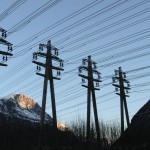
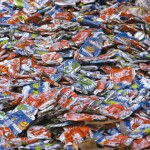
LightAluminium is a very light metal with a specific weight of 2.7 g/cm3, about a third that of steel. For example, the use of aluminium in vehicles reduces dead-weight and energy consumption while increasing load capacity. StrongIts strength can be adapted to the application required by modifying the composition of its alloys. Mixed with small amount of other metal, it can provide the strength of steel, with only one-third of the weight. Aluminium alloys increase in strength without loss of ductility. Long-lastingAll materials suffer degradation from weather conditions, corrosion and decay. Aluminium’s natural ability to resist these influences better than many materials is one of its most widely appreciated features. The durability of aluminium applications, such as in building structures, clearly demonstrates this. Very ductileAluminium is ductile and has a low melting point and density. In a molten condition it can be processed in a number of ways. Its ductility allows products of aluminium to be basically formed close to the end of the product’s design. Excellent heat and electricity conductorAluminium is an excellent heat and electricity conductor and in relation to its weight is almost twice as good a conductor as copper. This has made aluminium the most commonly used material in major power transmission lines. Highly corrosion resistantAluminium naturally generates a protective oxide coating and is highly corrosion resistant. Different types of surface treatment such as anodising, painting or lacquering can further improve this property. It is particularly useful for applications where protection and conservation are required. Completely impermeable and odourlessAluminium foil, even when it is rolled to only 0.007 mm thickness, is still completely impermeable and lets neither light aroma nor taste substances out. Moreover, the metal itself is non-toxic and releases no aroma or taste substances which makes it ideal for packaging sensitive products such as food or pharmaceuticals. Good reflective propertiesAluminium is a good reflector of visible light as well as heat, and that together with its low weight makes it an ideal material for reflectors in, for example, light fittings or rescue blankets. Infinitely recyclableAluminium is 100 percent recyclable with no downgrading of its qualities. The re-melting of aluminium requires little energy: only about 5 percent of the energy required to produce the primary metal initially is needed in the recycling process. |