



| Return to Aluminium For Future Generations |
The AFFG 2011 programme
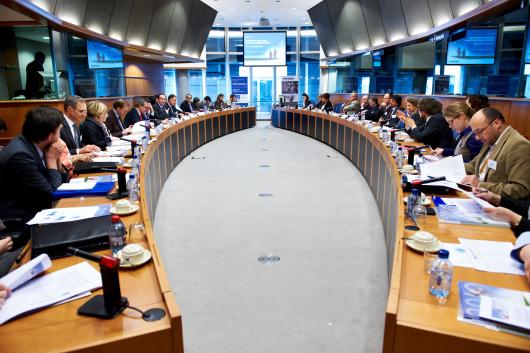
Sustainability Development Indicators (SDIs)2011 was a year marked by a key event: the launch in the European Parliament of the 2010 report on sustainable development indicators (SDIs) entitled Sustainability of the European Aluminium Industry 2010. The event, Aluminium’s Performance Towards a Sustainable Europe, was hosted by UK MEP Martin Callanan, who was there to present the report. This document outlines the significant contribution made by the aluminium industry to sustainability in the EU thanks to the material’s unique properties, such as light weight, ductility, durability and conductivity, and presents data from both SMEs and large integrated companies within the sector, employing a total of 255,000 people across Europe. Callanan opened the discussion with the words “I strongly encourage sustainability reporting and the aluminium industry has much to offer when it comes to sustainability, making a key contribution towards achieving the EU’s 20-20-20 objectives.” EAA environment, health and safety manager Sandro Starita said that over 30 SDIs had been identified for the production of aluminium and that the scope of the 2010 report had been enlarged to include main uses and applications. He then outlined some of the key findings of the report. In terms of GHGs, emissions of CO2 per tonne of primary aluminium were down by almost 50% since 1997, with perfluorocarbon (PFC) emissions reduced by 90% since 1990. Moreover, 48% of the energy required to produce primary aluminium was coming from renewable sources. Starita underlined the fact that Europe is a world leader in the area of recycled aluminium, producing 3.5 million tonnes of the metal through recycling activities. Of the aluminium produced in Europe, 48% is from recycled sources, while four million tonnes (11% of global production) comes from primary sources. |
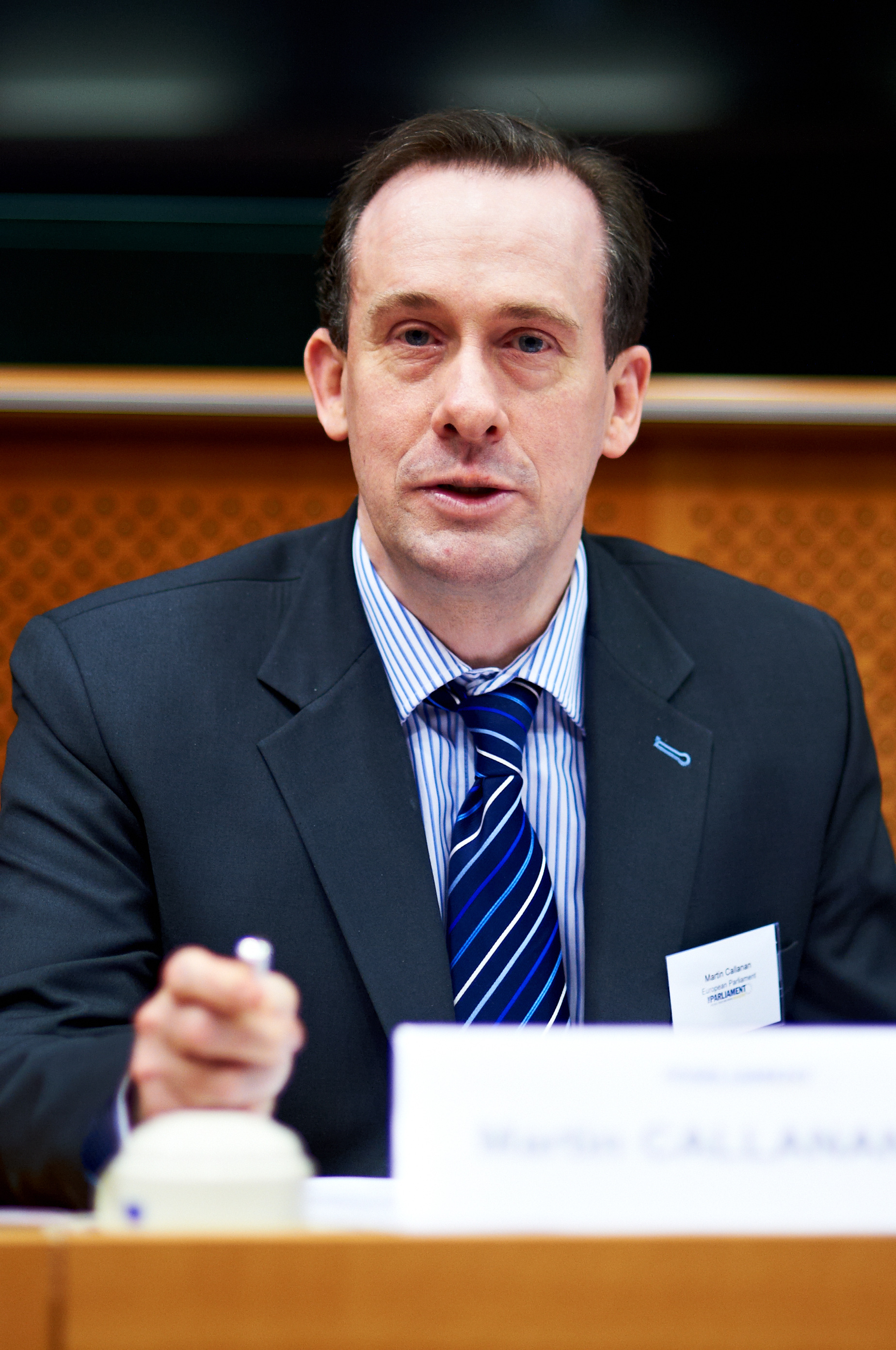
UK MEP Martin Callanan |
 |
The aluminium recycling process uses 95% less energy than primary production and this has paved the way for global competitors to move in and purchase European scrap for reuse in other markets. EAA secretary general Patrick De Schrynmakers called for market distortion to be taken into account because, with competitiveness essential to the survival of the whole value chain, it is vital to keep it in Europe. “It is very important that Europe keeps aluminium primary production. If we lose that, we lose it all. It’s essential,” he said. EAA environment, health and safety director Erik Nordheim maintained that even if Europe could keep its scrap, it would still need to import primary aluminium. EAA chairman Tadeu Nardocci stressed that scrap is energy, but that it is very hard to keep it in Europe. Representatives from the European Commission’s DG Environment highlighted the huge discrepancies that exist between Member States in recycling and collection rates and pointed out that the amount of scrap available is actually increasing. |
Aluminium in electric vehiclesElectrification of vehicles is of increasing interest to both policy makers and automotive original equipment manufacturers (OEMs). However, the development of electric cars is hampered by the high cost of battery systems relative to the power and autonomy they can deliver. A preferable way to decrease the required battery capacity of a fully electric vehicle is to reduce its dead weight. A study co-funded by EAA/AFFG, EAA Automotive and Transport and the International Aluminium Institute (IAI) developed models to assess cost savings for battery systems and those made during the use phase with lightweight aluminium designs. The results should be available during the first quarter of 2012. |
Energy performance of buildings: renovation case studiesAiming to determine the contribution of aluminium building products to the upgrade of energy performance of existing buildings, three renovation cases were studied in 2011, identifying CO2 payback periods in the range of one to four years. The buildings were located in Zeist (NL), Dekendorf (D) and Thessaloniki (GR). Further cases are set to be investigated in 2012. Other projects are ongoing and will yield results in the course of 2012. Documentation of these cases will therefore be postponed until the 2012 activity report and will appear together with other 2012 projects. |