
Railways
|
• For underground and tramways, light vehicles were needed to lower running costs and improve acceleration.
• For the high speed trains, the choice of aluminium proved to be almost a must, as these trains needed to travel at more than 300 km/h on traditional railway tracks.
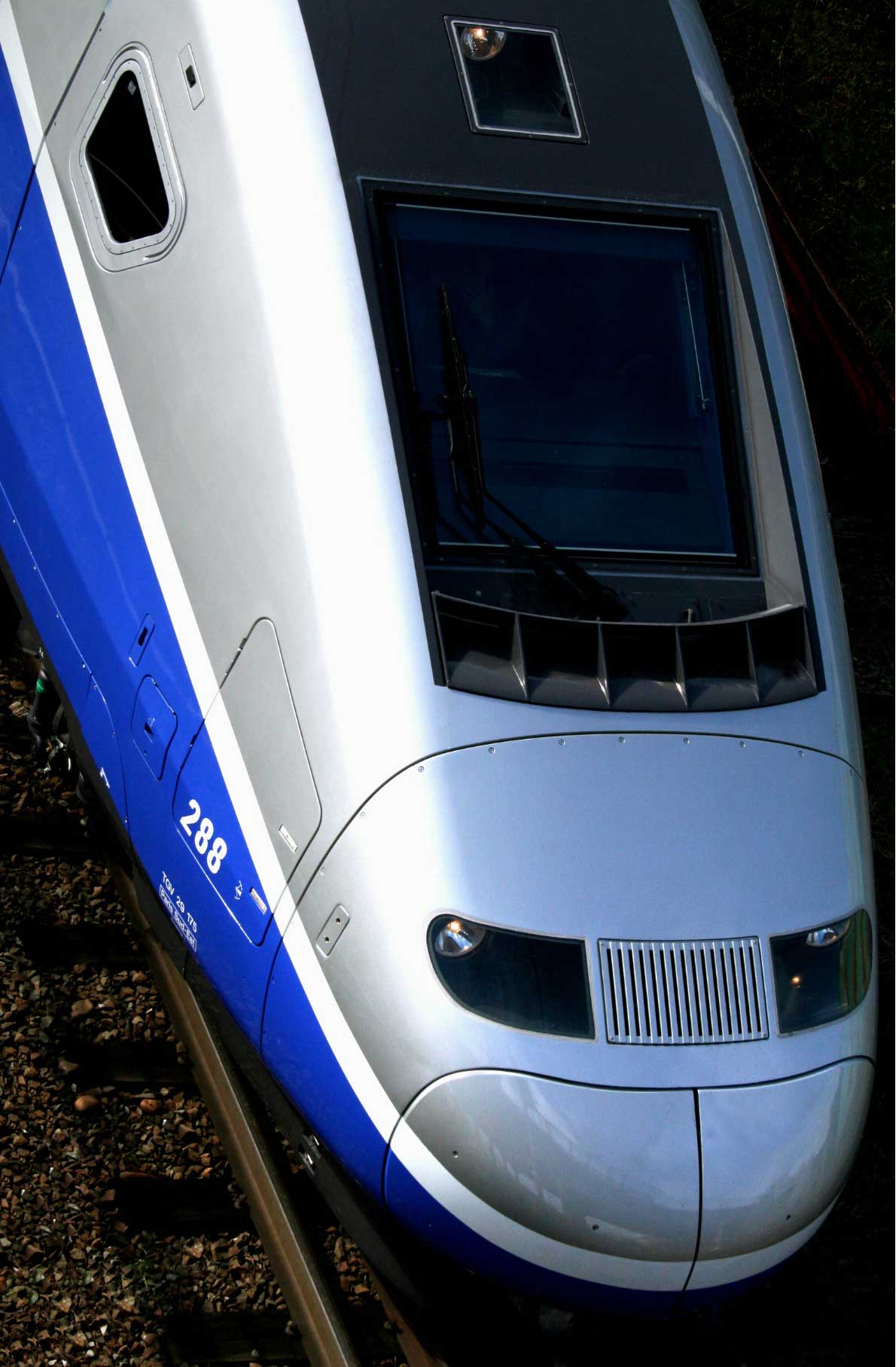
A good example of aluminium’s benefits in the public rail transport sector is the TGV-Duplex. Developed by Alstom by order of the SNCF, it weighs 12% less than the traditional TGV, transports 40% more passengers, and offers superior passive safety.
For goods transport, an important use of aluminium occurs in countries such as the USA, Canada, and South Africa, which are rich in coal, metal ores, and other minerals, and which need to transport these materials over considerable distances between mines and production plants or port facilities. In these countries, aluminium railcars offer increased payloads that often compensate their extra purchasing costs in less than two years.
(Reference: “Aluminium for the transportation Industry” in Europe, Carmine Garzia-Edoardo Mollona, 2002, Bocconi University, Milano).