



Moving up to Aluminium - NEW
Download: Moving up to Aluminium - High payload, safe and sustainable road transport |
Present and future CO2 reduction potential thanks to aluminium in European articulated trucks - NEW
EAA Automotive & Transport group has conducted a study on the present and future contribution of aluminium for reducing CO2 emissions of articulated trucks.
|
According to the European Commission, Trucks and buses are responsible for about a quarter of CO2 emissions from road transport and despite some improvements in fuel consumption efficiency in recent years, emissions are still rising, mainly due to increasing road freight traffic. |
 |
Study - Present and future CO2 reduction potential thanks to aluminium in European articulated trucks |
Aluminium for safer trucks
EAA Automotive & Transport group has conducted a study on passive safety on heavy goods vehicles.
|
EAA Automotive & Transport group has extensively worked with FKA (Forschungsgesellschaft Kraftfahrwesen Aachen) on a design concept for crash boxes (or “Crash Management System”) at the front of trucks’ cabin that would absorb energy in case of a frontal crash with a vehicle. The share of lorries in fatal accidents is disproportionate: trucks represent 3% of the vehicle fleet but are involved in 18% of fatal accidents (EU27 in 2008). The study shows that the severity of car to truck accidents could be significantly reduced if an 80 cm energy absorbing crash box was used at the front of a tractor. A crash could be 15% less intense for cars, therefore reducing the severity of cars to trucks collisions. |
The following objectives could be met with limited costs for transport manufacturers:
- Between 3.200 and 3.800 accidents involving trucks with less harmful consequences each year (taking as baseline the 7.070 fatalities in 2008 in EU27);
- Including 300 fatalities per year among vulnerable users thanks to reduced blind spots and a deflecting shape of the cabin;
- Reducing CO2 emissions between 3.2.% and 5.3% (for a 40t haul truck);
- Saving €1.500 per year on average for fuel consumption.
|
Leaflet - Aluminium for safer trucks |
|
The full report can be downloaded here |
|
Smarter, Safer, Cleaner: Summary from Transport & Environment |
Aluminium in Commercial Vehicles Manual
The Manual “Aluminium in Commercial Vehicles” has been compiled by the European Aluminium Association in answer to the needs of manufacturers and users of commercial vehicles and accessories.
It is a compendium of basic information on such aspects of aluminium as:
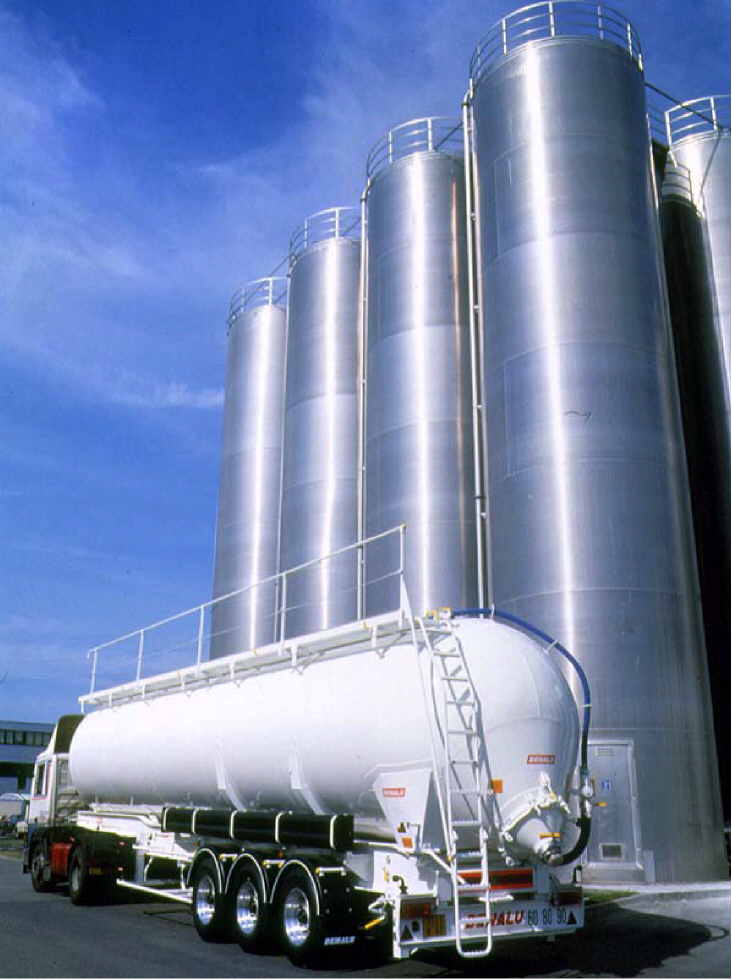 |
• The reasons for using it • The main rolled, extruded and cast alloys available to manufacturers; their properties, mechanical characteristics etc. • The design and calculation of structures, fatigue and collision behaviour • The joining of semi-finished products: fabrication, welding and other joining techniques • The corrosion resistance of aluminium alloys under service conditions • Surface treatment • Cleaning and repair |
This guide will be of particular interest to design and process engineers, to repair and maintenance managers and more generally to anyone with an interest in the applications and development of aluminium in road transport.
 |
Download the manual “Aluminium in Commercial Vehicles“ |
 |
Download das handbuch “Aluminium im Nutzfahrzeugbau“ |
 |
Télécharger le manuel “L’aluminium dans les véhicules industriels“ |